Built for Live: Listings
Each month, we ship new features, spotlight category growth, and share seller insights. This time, we’re introducing something bigger.
Over the next three to six months, we’re laying the foundation for a more intelligent, AI-powered marketplace. And it starts with listings. Not just as a way to describe what you’re selling, but as the system that powers discovery, pricing, shipping, and everything in between.
Listings are the backbone of marketplaces. Seriously, imagine for a moment you take away the listings from legacy marketplaces, all that’s left is a search bar and some filters on now empty pages. Listings are the only way to know what’s available for purchase and the official record of what was exchanged between buyer and seller.
But Whatnot is built around our sellers. The shows are the storefront, the merchandising layer, and the record of what was sold. It turns out when there is a live seller showing you an item, describing it, answering questions about its vintage or condition or if it runs big/small, you largely don’t even need a listing! No other marketplace works without them, and yet we scaled to $8B in livestream sales with nearly 90% of listings being generic – “item as shown,” “random pull,” or “listen for size.”
And it turns out, that's a feature, not a bug. Generic listings are fast, taking under two seconds to create on average versus three minutes on a legacy marketplace. They eliminate the hidden time tax of traditional listing flows, saving sellers an estimated eight million hours last year. That speed is what makes three-second sudden deaths possible, enables some sellers to move 7,000 items an hour, and ultimately drives live selling to outperform traditional e-commerce.
But there are limits to speed. To grow demand, build trust, and improve efficiency, listings need to be both fast, and good.
That’s the opportunity: listings, but better
“Listen for size” is brilliantly fast for you, but imagine for a moment you’re one of the 20 million new people who downloaded Whatnot last year, who are used to the rest of the internet. “As seen on screen” confuses the heck out of them, hurting conversion, misses high-intent buyers, drives up refunds, and hikes up shipping costs.
The data backs it up: last year, ~90% of listings were generic, yet 91% of new buyers made their first purchase on a non-generic listing. Think about all the time you spend trying to attract new buyers – all the giveaways, all the marketing, all the experimentation with new supply and show formats and yet your listings turn away 90% of them.
As more categories scale, listings become even more important. Fashion is a clear example. It is now overwhelmingly our biggest vertical by order volume, driving nearly 2x more orders than Sports Cards & Memorabilia, but converts at a third of the rate.
The reason is structural. Categories like Sports are inherently specific and standardized. In the Sports category, you’ll find Football, Basketball, Baseball, etc. Consider the Fashion category, there’s Bags & Accessories, Activewear, Vintage clothing, Jewelry, Shoes, and dozens if not hundreds of sub categories in each. It’s broad, variable, and fragmented. That’s why Fashion sellers lean on multi-quantity listings. They’re fast, but those listings aren’t searchable – and in many cases aren’t even understandable unless you sit and watch the show for a few minutes, so conversion takes a hit. You live and breathe Whatnot, so you understand generic listings, but put yourself in the shoes of someone coming to Whatnot for the first time, joining a show, and seeing this:
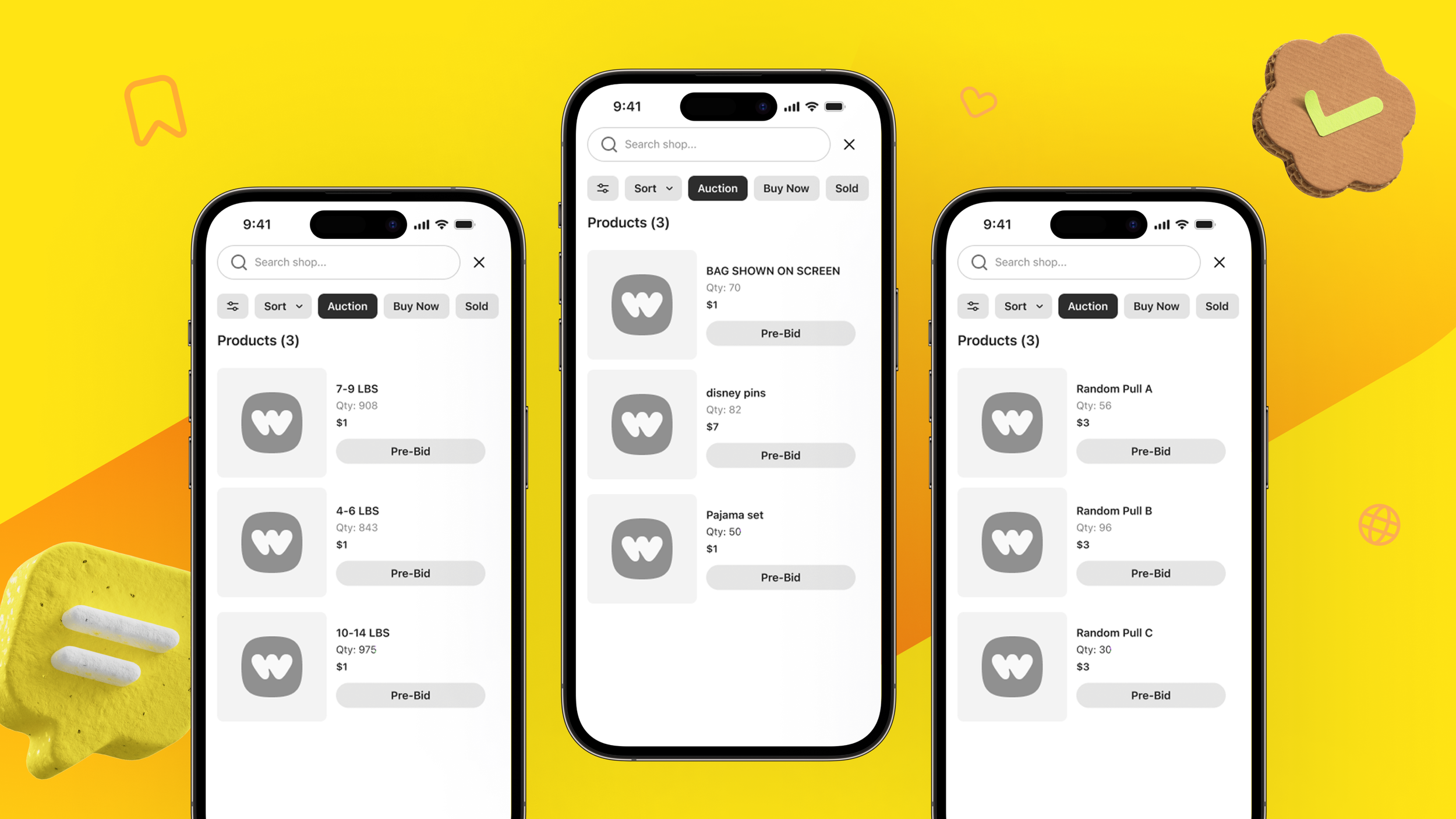
If you go to Adidas.com to buy shoes, you see the model, size, and key details upfront. This is so far from that it may as well be in another language for a would be buyer.
We are not replicating traditional e-commerce, but we do need to give buyers clearer signals so they can act with confidence before, during, and after a show. This matters even more as we scale. We added 20 million new users last year and will keep accelerating as the rest of the world discovers the magic of live shopping. Capturing that demand starts with better listings, before a show even begins.
The data makes it clear. Pre-bids have more than doubled in the past year, and orders with a pre-bid see about 45% higher average order value. You cannot pre-bid on “item in hand,” so without detailed listings, that demand never materializes.
They matter after the sale, too. The average Whatnot customer makes multiple purchases a show, but when everything is labeled “Random Item,” it’s hard to keep track of what’s what. That confusion leads to support tickets, refunds, and disappointed buyers. Better listings reduce all of it.
Lastly, they change the economics. Shipping cost is one of the biggest drivers of buyer behavior. Nearly 50% of orders qualify for free shipping through bundling, but bundling only works when we know what’s being shipped. Vague listings mix items with different shipping profiles, leading to missed bundling opportunities and inefficient pricing. Better data enables smarter bundling, fewer carrier adjustments, and steady improvement over time.
Evolving to a new suite of listings tools, and keeping the speed
Speed still matters. That’s not changing. What’s changing is how we build on top of it, keeping the speed, while adding structure where it drives real value. That’s what this next set of updates is about.
To be clear, there are real tradeoffs here. We’ve tested a lot, and plenty didn’t stick. Working closely with sellers made one thing obvious: everyone sells differently. You don’t list a Chanel handbag like a stack of t-shirts. Some sellers already have detailed inventory recorded in a Warehouse Management System (WMS), others source in bulk from pallets or re-sell vintage products they’ve curated by hand. We’re not building for just one category or subset of sellers. We’re introducing a new suite of listing tools built for all of them.
So we’ve been testing a simplified flow with three clear starting points: create a template, import from inventory, or create an individual listing.
Here’s how each works:
Listing Templates: Stop Cloning. Start Scaling
We've been working with a handful of sellers to turn generic listings like “Random Pull A” into easy to understand, search and ship listings with a single extra click.
Templates are a quantity-less listing that lets you tell buyers that you have a variety of similar items, with key options like brand, size or color shown to them. With a few extra seconds in set up:
“Shoes listen for size” becomes > Sneakers (Nike, Adidas, HOKA / Size 6-12)
“Random Pulls” becomes > Tops (Free People, ALO, COMMENSE)
“Golf Balls” becomes > Golf Balls (Callaway, Titleist, Vice)

When you run an item, just specify what matters (size, brand, color) and go. Those attributes show on screen while the auction runs, flow through to the buyer's receipt and your packing slips – minimizing errors and any subsequent confusion. In testing with high volume sellers we’re seeing a sweet-spot of three to six templates to balance speed and specificity.
Show prep gets faster too! Templates save to your inventory, so once made can be loaded into any subsequent shows. If your inventory has changed you can just update sizes or brands – and if not do nothing at all. Do it once and move faster every time. No cloning. No more 999 qty. As always, we test and iterate new products, so you’ll see templates first in Fashion, Beauty, and Jewelry, with more categories to follow. If you want to try it early, sign up here.
As sellers reuse templates, they’ll improve: what sells, how pricing shifts, what buyers respond to. Over time, AI builds on that, suggesting better titles, smarter categorization, the best shipping profiles, even pricing guidance. Less manual work, better performance. Buyers can actually find what they want, and you keep the speed without the chaos.
But templates aren’t the answer for everything. If you’re managing inventory elsewhere, you shouldn’t have to turn those into templates. You need a different starting point.
Shopify Integration: Connect Once. Sync Everywhere
Whatnot is a primary channel for many sellers, but not the only one. So inventory, orders, and fulfillment need to stay in sync. For most, that starts in Shopify.
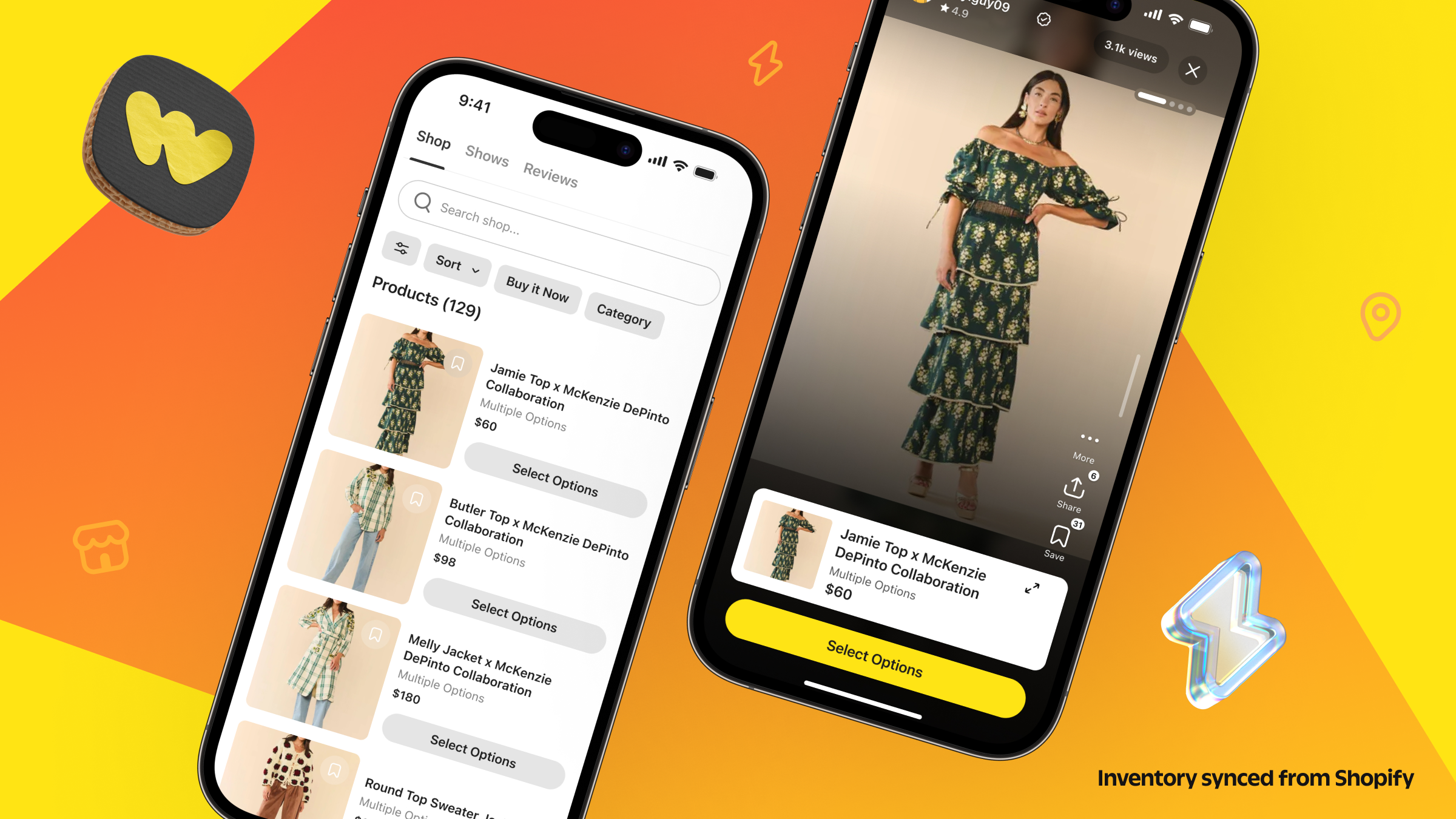
Until now, getting that inventory into Whatnot meant extra steps like CSV downloads/uploads, or stripping listings down just to move fast. That’s how rich product pages turn into “item as shown.” With our Shopify integration, it’s near zero effort to bring in high-quality listings and keep them intact.
It keeps everything aligned without extra work. You can bring in some or all of your Shopify inventory and turn it into live-ready listings. Titles, variants, attributes all come through. No rebuilding required. Once it’s in Whatnot, you run it your way: Buy It Now, Flash Sales, Giveaways, or Auctions. Same inventory, more ways to sell. And when something sells, it syncs right back to Shopify.
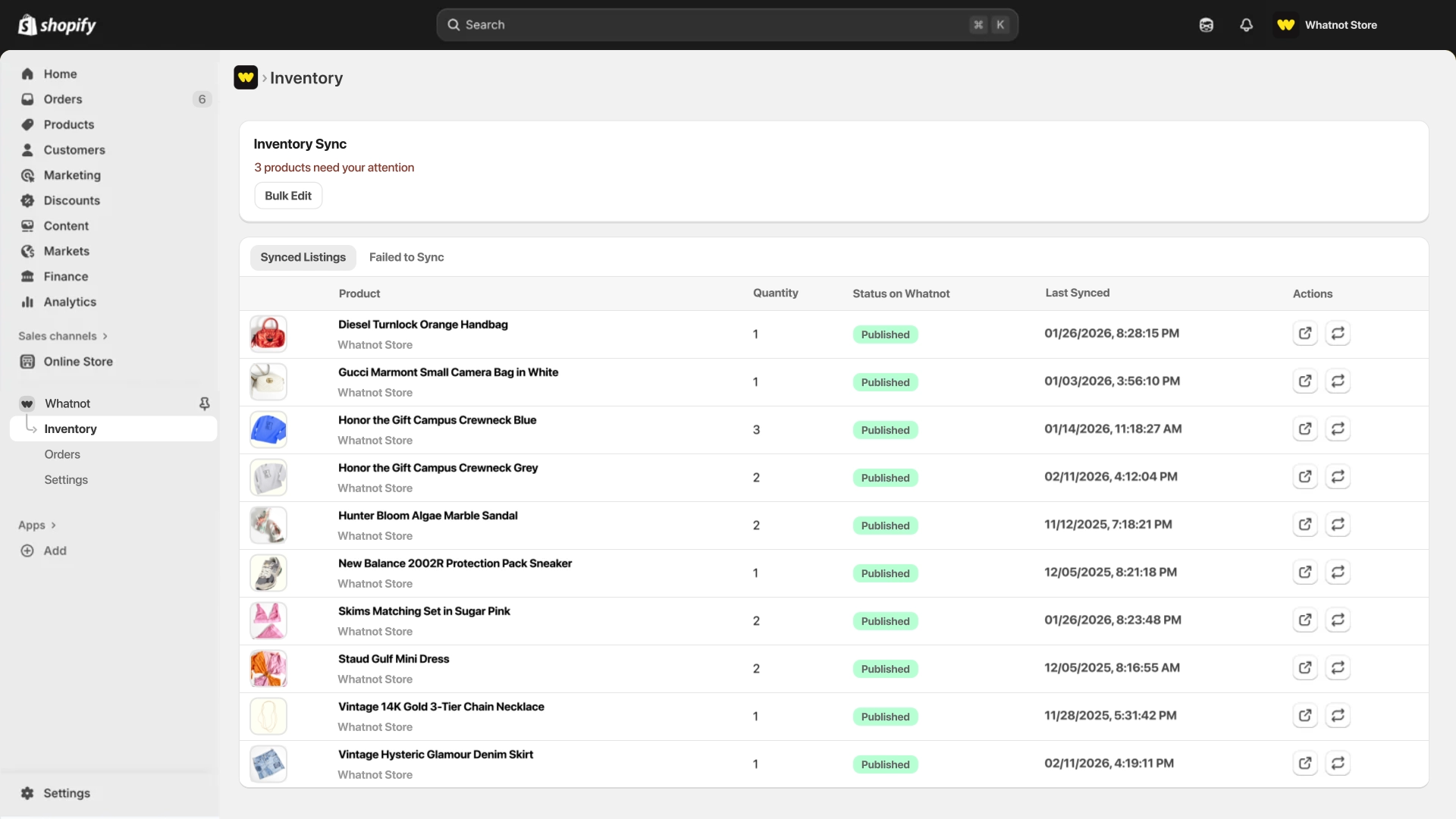
If you’re already running on Shopify, this fits into how you operate. And if you use third-party logistic providers, your Whatnot orders sync automatically. We don’t support every provider yet, but we’re working on it – which is part of a broader shift. We’re building a new inventory API to connect with any WMS, or Third-Party Logistics (3PL). Because while Shopify is the most used tool among our sellers, there are thousands of tools sellers rely on. The goal is to manage inventory and orders in one place, but sell everywhere.
Listing Variants: One Listing. More Ways to Sell
Many sellers have products with fixed options, like sizes and colors. When you import from Shopify, those variants are already defined and supported as-is. Soon, you’ll be able to create and manage variants just as easily directly in Whatnot.
Instead of creating a separate listing for every size or color, group them into one: like a single sneaker model with sizes 9-11 across multiple colors.
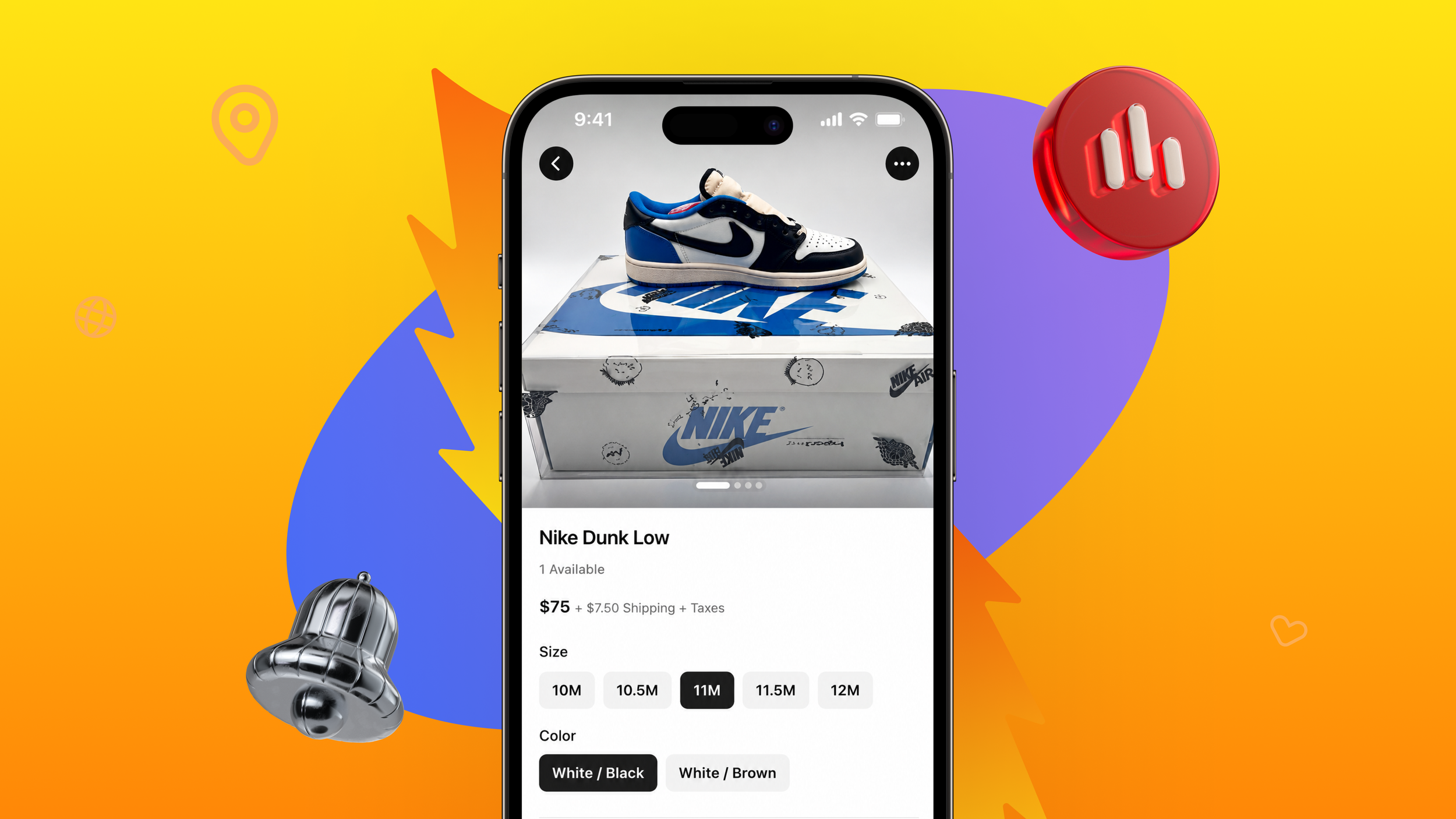
Each option lives under that product as its own inventory unit, and you can run any variant as an Auction, Buy It Now, or Flash Sale. The result is simpler to manage and far easier to shop, setting you up for more accurate shipping from the start.
Better listings, lower shipping costs
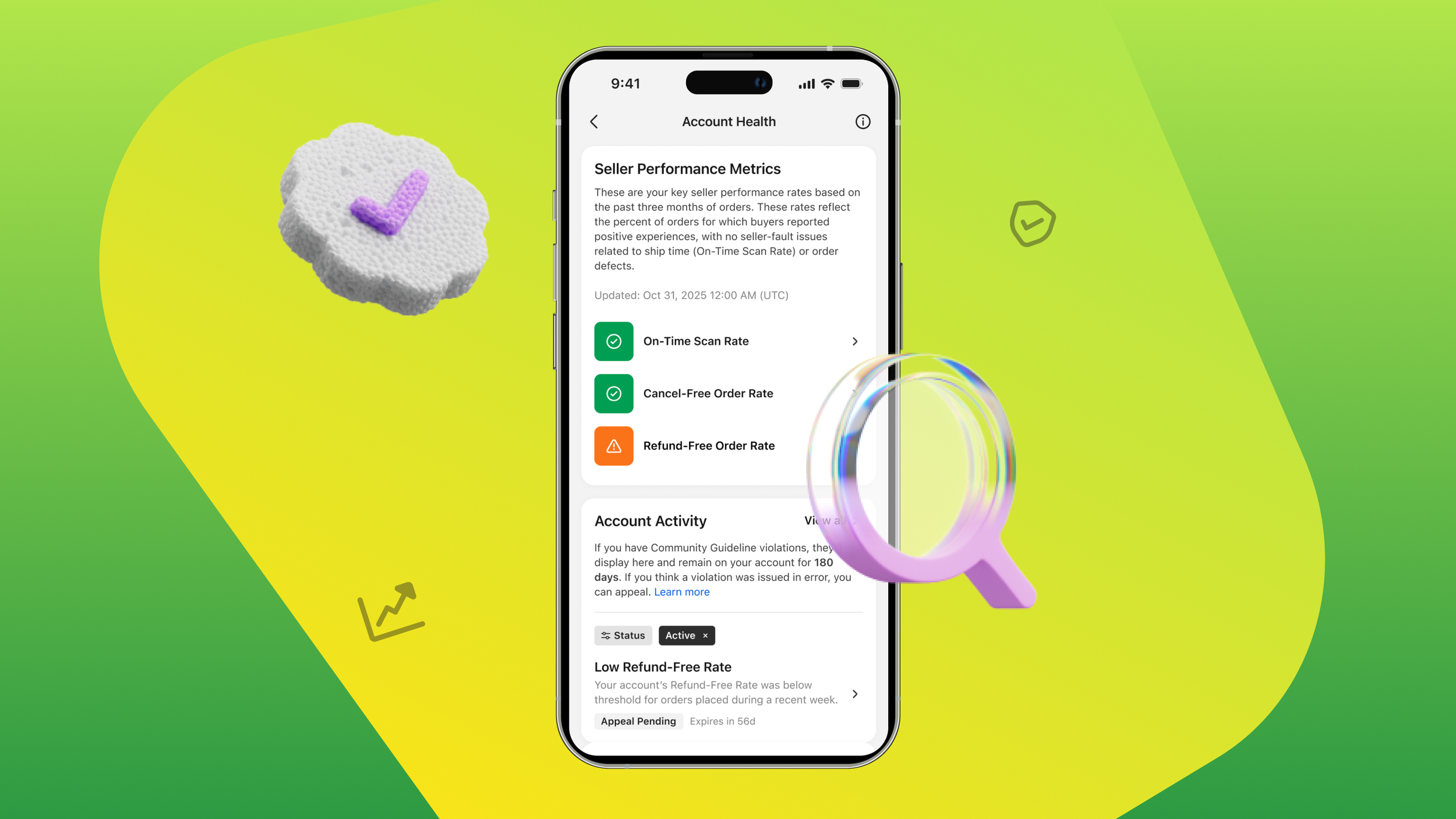
Last month, we launched a Carrier Adjustments dashboard (starting in the U.S. and expanding internationally soon) to show sellers exactly where shipping errors happen, and how to fix them. Most adjustments come down to one thing: mismatches between what was listed and what was shipped. The fix starts at the listing. Templates help because they group similar items making it easier for you to pick the right shipping profile, but the richer the listing the better we can use AI to recommend one for you automatically
When sellers move away from generic, one-size-fits-all shipping profiles and use accurate, weight-based listings, adjustment rates drop fast. We’ve already seen sellers cut adjustment costs by up to 83% in just a few weeks by tightening listing accuracy.
We’re continuing to invest here with smarter workflows, dimensional shipping profiles, and our AI-powered drop off scanner to verify weight and dimensions in real time. Those investments don’t just improve the experience of shipping today, but unlock our ability to support more carriers in every market.
Get the listing right. Everything downstream gets easier.
Make your listings work for you
Listings don’t just power checkout and shipping. They power everything in between – how you’re discovered, which buyers join your shows, how buyers are notified, and how your products show up across the platform. You can explain what products you have to people who are in your show, but what about those who aren’t in your show?
Better listings bring buyers in early and convert them once they’re there. Last month, we started surfacing live listing tiles directly in the feed. Buyers can see what’s running in your show at that moment, with the name, price, brand, and status, all without entering. The clearer your listing, the more compelling that preview. It’s real-time discovery, driven entirely by your listing quality. And it’s working: adding brands to Beauty listings drove more than 12% lift in new buyer conversion.
Fixed-price is also a big part of that shift. Buy It Now works when buyers know exactly what they’re getting. Sellers who run three or more Buy It Now listings during a show see about 2x higher sales per hour, with roughly 40% coming from fixed-price.
We’re building on this momentum with a more dynamic Buy It Now experience at the show level. Think progress bars, chat callouts, and milestone moments that keep energy high throughout. You can build momentum with fixed-price, then transition seamlessly into auctions. Buy It Now doesn’t have to feel static. It can carry the same energy as an auction, and that’s exactly where we’re taking it.
One system that ties it all together
There’s a spectrum to how sellers operate. On one end, low-fidelity inventory. Pallet pulls, vintage hauls, random singles. On the other, highly structured inventory with every detail dialed in.
Live is a blank canvas on which anyone can sell just about anything. We want to make sure our listings tooling is just as flexible.
How you turn that inventory into listings will vary. But once it’s in the system, everything else should just work. How you run it in a show. How easily buyers find it. How it shows up in receipts and pick and pack. That should feel consistent, no matter what you sell.
The same goes for how you sell. Some shows are rapid-fire auctions. Others are buyer requests, pick-your-box formats, or high-end items that need time and storytelling. There’s no single way to do it, and there shouldn’t be.
We’re working to take the speed and energy of live selling, and combine it with AI-driven intelligence so the marketplace gets better with every transaction. Expect more formats. More flexibility. Built for how you sell.
— Tom Verrilli
Whatnot Chief Product Officer