Knowing who’s in your show helps you decide what to sell, how to engage your audience, and where to spend your time. As technology changes how some people find and shop on Whatnot, we want you to have a clear view of that audience.
AI can help someone track down a hard-to-find pair of trainers or discover a seller who specialises in their favourite vintage brands. But it’s also making it easier to automate activity across the internet. Some automated tools help sellers manage their shows. Others are used to inflate viewer counts by joining hundreds of shows at once, enter giveaways at scale, or spam chats. That activity can make viewer counts less useful and keep giveaways from reaching the people you’re trying to connect with.
We’re taking action against harmful automation while giving you a clearer view of who’s in your show. Today, we’re adding more audience information to Seller Analytics and strengthening giveaway protections. Here’s what that means for your shows.
A clearer view of your audience
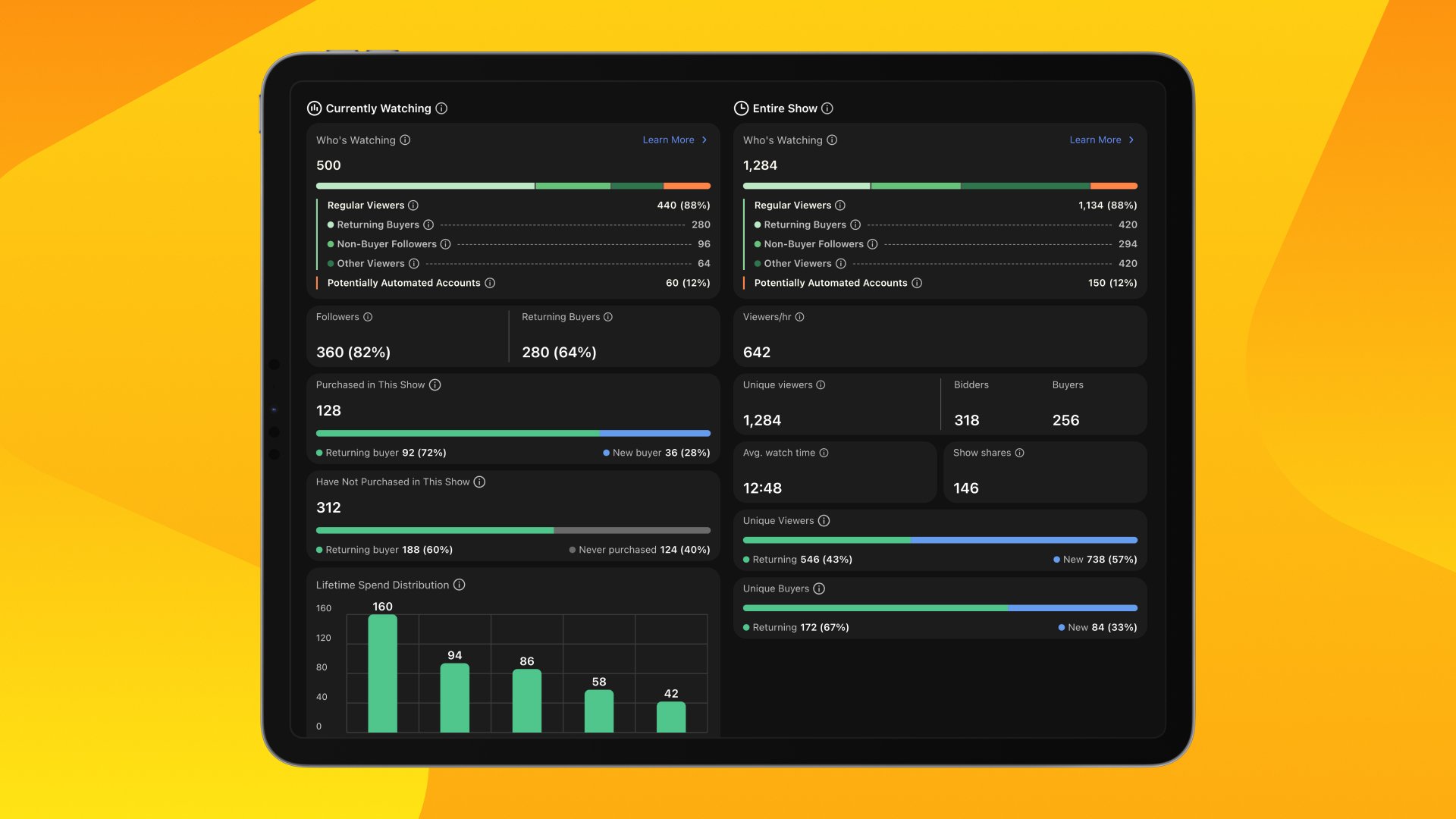
A new buyer asking how a denim jacket fits and a regular checking what’s coming up next both count as viewers. So can an account connected to hundreds of shows at once. The total alone doesn’t tell you the difference.
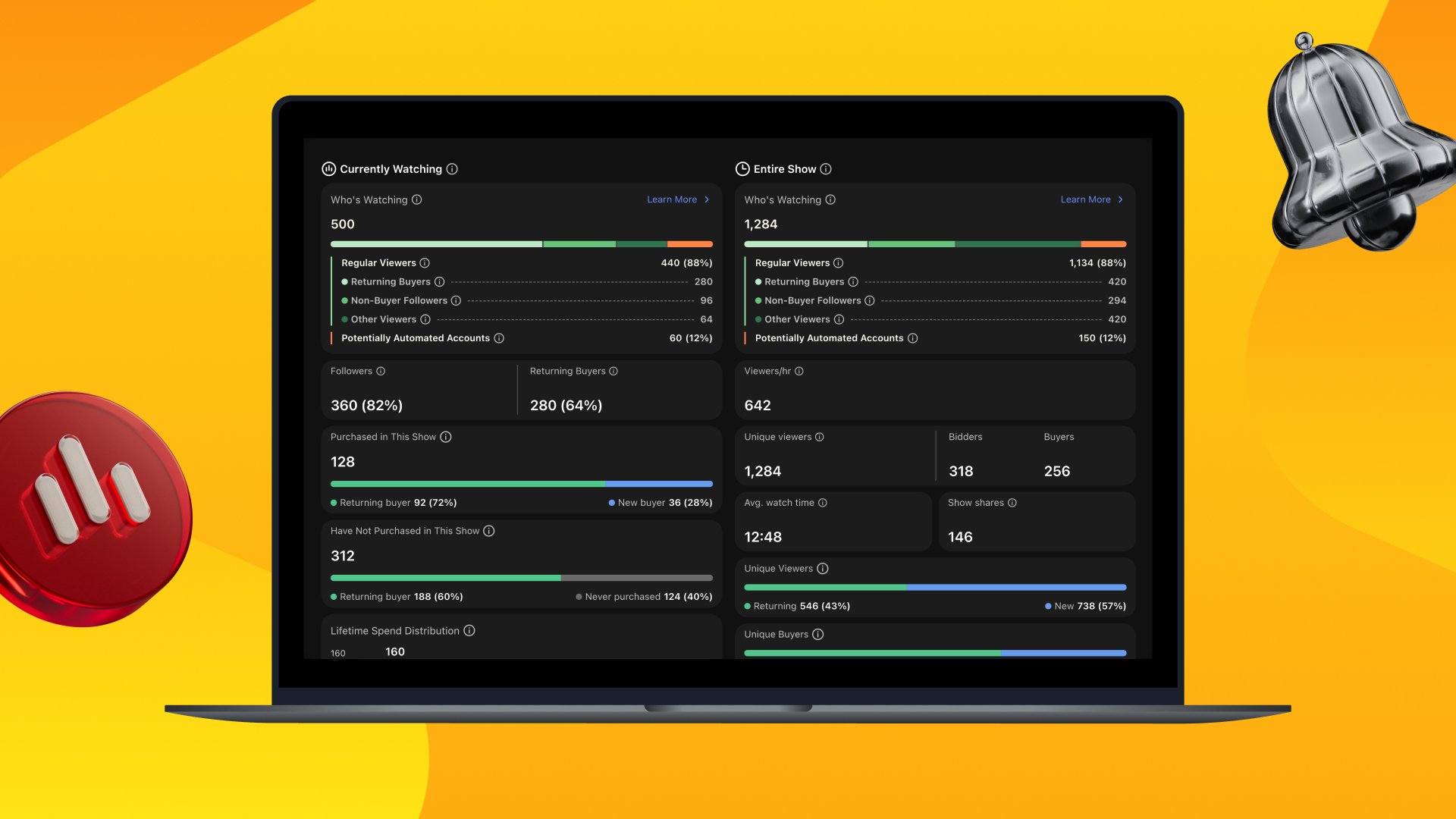
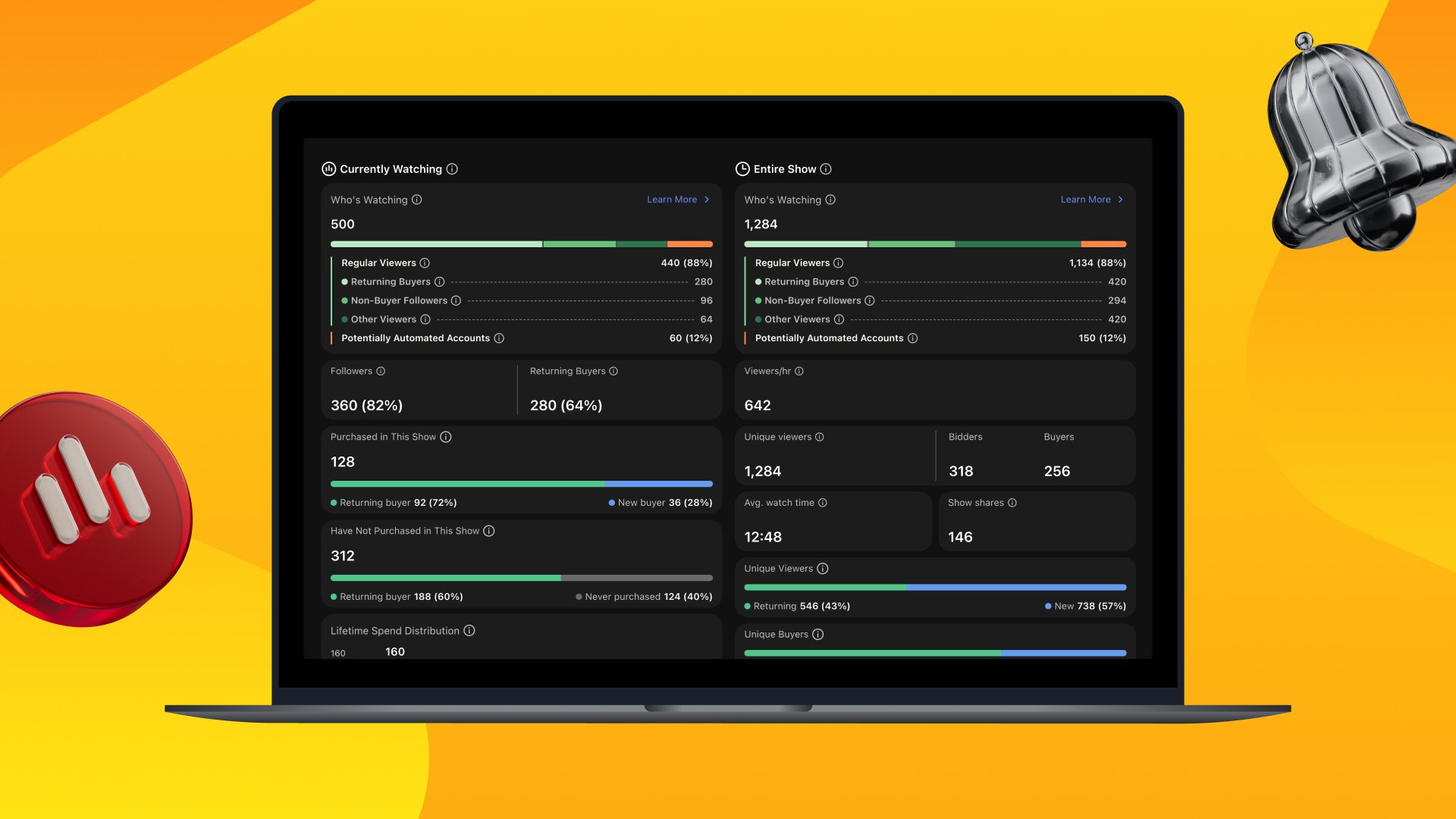
We’re adding new audience information in Seller Analytics that helps you distinguish regular viewers, including returning buyers and followers, from potentially automated accounts watching many shows at once. You can use that context to decide what to run next or when to stay live a little longer.
Watching several shows doesn’t necessarily mean an account is automated. These insights help you spot unusual viewing patterns and better understand the people spending time with you.
Why your viewer count may change
Alongside these new insights, we’re limiting automated activity that artificially inflates audiences. A dedicated team monitors this activity and takes action against accounts using automation to inflate viewership, abuse giveaways, or spam other users. Our protections also account for legitimate buying behavior, including collectors following several auctions and businesses with buying teams working from one account.
These accounts change their tactics, so you may also see spikes in potentially automated viewers followed by drops as we investigate and take action. Your audience breakdown helps you track your regular viewers through those changes.
If you’ve spent months building your audience, seeing that number drop can feel like going backwards. But removing an automated account isn’t the same as losing a customer. We’re also building these updates so changes to viewer counts won’t affect how buyers discover your shows.
To understand how your business is doing, look at unique buyers, orders, sales, and returning buyers alongside your new audience breakdowns. Together, they give you a fuller picture of your show’s performance than viewer count alone.
Your best show isn’t always your biggest. Sometimes it’s the quiet one where a new buyer asks for help choosing a lip colour, buys your recommendation, and comes back next week. Those connections matter to your business, even when the viewer count barely moves.
Giveaways are for buyers
A giveaway can attract new buyers, introduce them to your business, and give them a reason to stick around and see what you run next.
We’re strengthening our protections so your giveaways reach real people. As a first step, we’ll be excluding these potentially automated accounts from entering giveaways. If you suspect a winner is using automation or otherwise abusing giveaways, report them through the in-app reporting tool so our team can investigate.
We’ll keep adapting our protections to stop new forms of abuse while keeping giveaways easy for real people to enter.
Whatnot stays human
This work won’t finish with one product update. Automated tools will evolve and we’ll keep adapting our products and protections to stay ahead.
AI can find the watch you’ve spent months hunting for or introduce you to a seller halfway around the world. But the reason you spend an hour in their show, asking questions, and coming back next week is the person on the other side. We’ll keep building tools that strengthen those connections and protect the experience that brings people back.